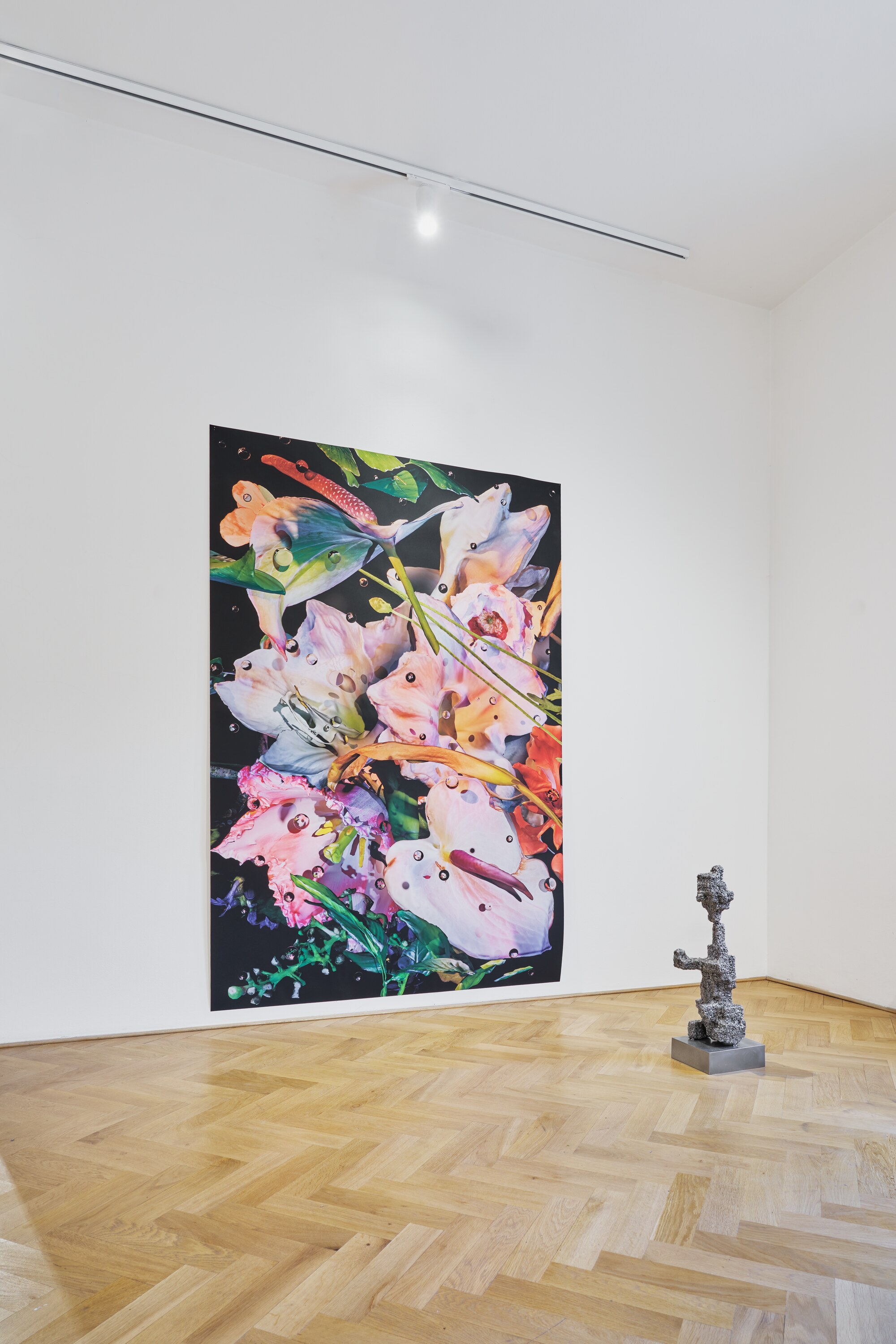
Substance P is a signalling substance of the nervous system involved in the transmission of pain, stress and affective arousal. In the context of today's digital reality it becomes a metaphor for the permanently excited nervous system of late-capitalist society, continuously stimulated by algorithms, social networks, information overload and an accelerated economy of attention. The exhibition takes up this motif as a conceptual figure of the present world, whose infrastructures, digital, pictorial, logistical and psychological, no longer produce only connection, speed and availability. They also produce fatigue, overload, and a pain that is no longer latent but constant and oppressive.
Pavel Kubesa, Substance P, Galerie Stanice 6, Prague, 2026
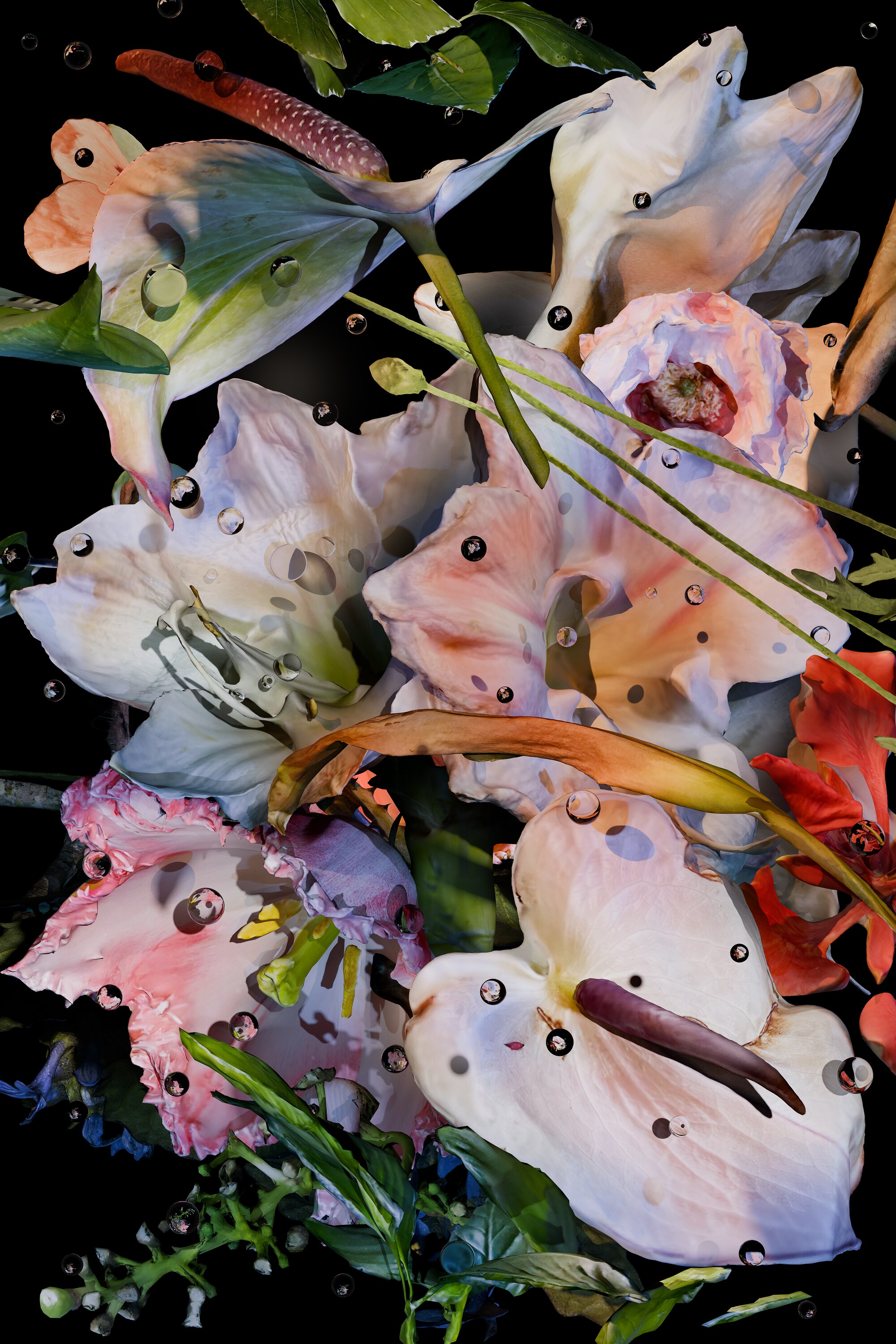
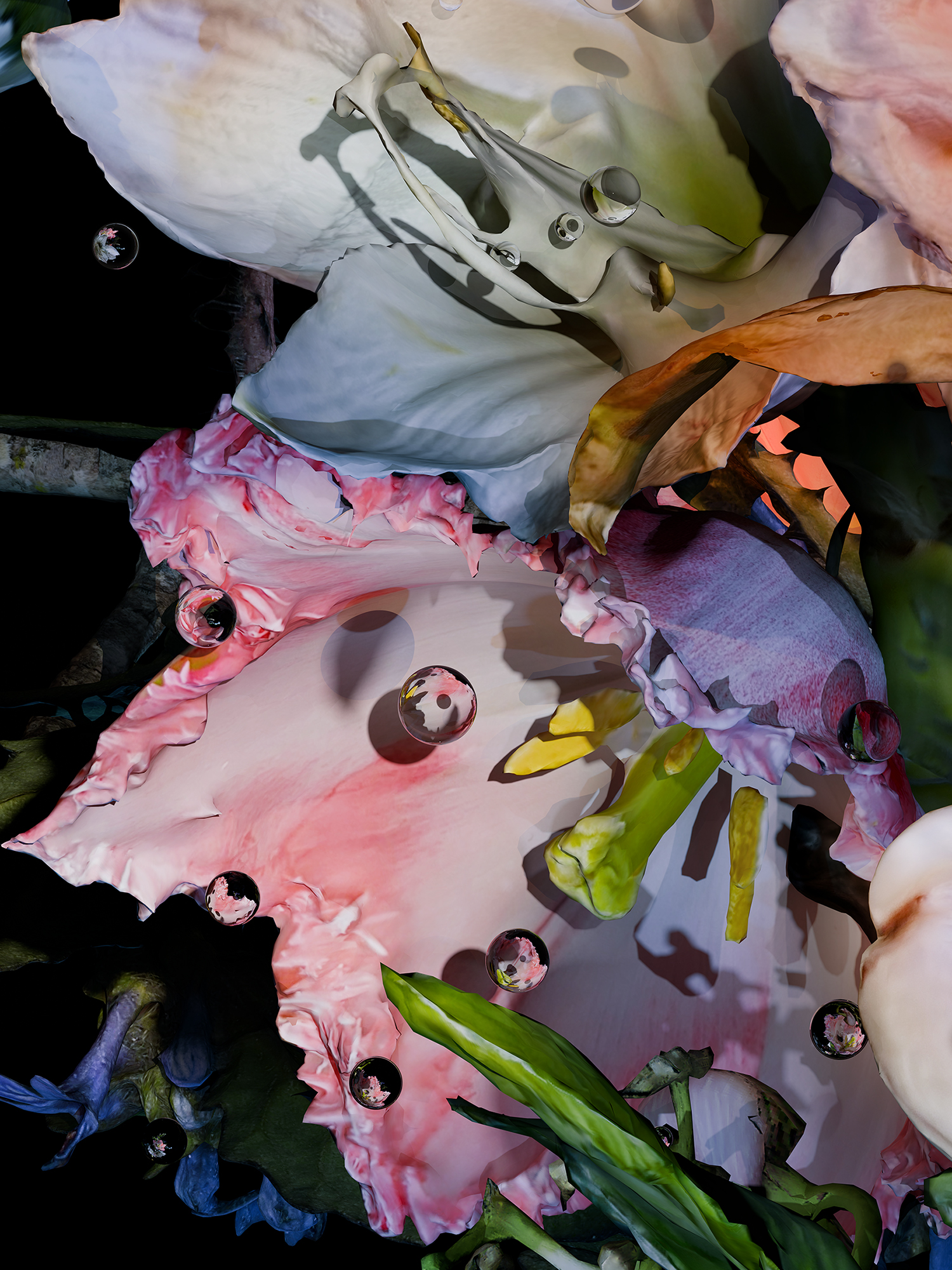
The work is part of a broader visual research that works with 3D scans of flowers gathered from distributed digital platforms, from scientific archives and game asset databases to amateur photogrammetry made at home. This "logistical bouquet" is assembled from globally circulating digital remains, which the artist subjects to a strict photographic logic in the environment of a 3D studio. The result recalls the historical tradition of the Dutch still life. Here the bouquet is made of data fragments of varied origin, quality and resolution, in place of botanical studies.
The title and the concept refer to the Czechoslovak mass-produced needle case of the "Galant" brand. For the artist this object is a key visual code: a pleasing, sentimental image of a flower basket that serves as a protective layer for sharp steel tools able to wound the skin. In the digital version this tension passes into the relation between the soft surface of the petals and the technical sharpness of the algorithm. The small drops of water on the bouquet read as pinpoints, or as the visualised points of a point cloud. They hold the whole composition in a fragile and unstable state.
The work examines a state of "withering globalism", a situation in which the digital circulation of images keeps accelerating while faith in seamless global connectivity weakens. The bouquet becomes an "image of the whole world". Sentiment meets technological coldness in it, and each scan is an orphaned witness of a specific time and place, now uprooted.