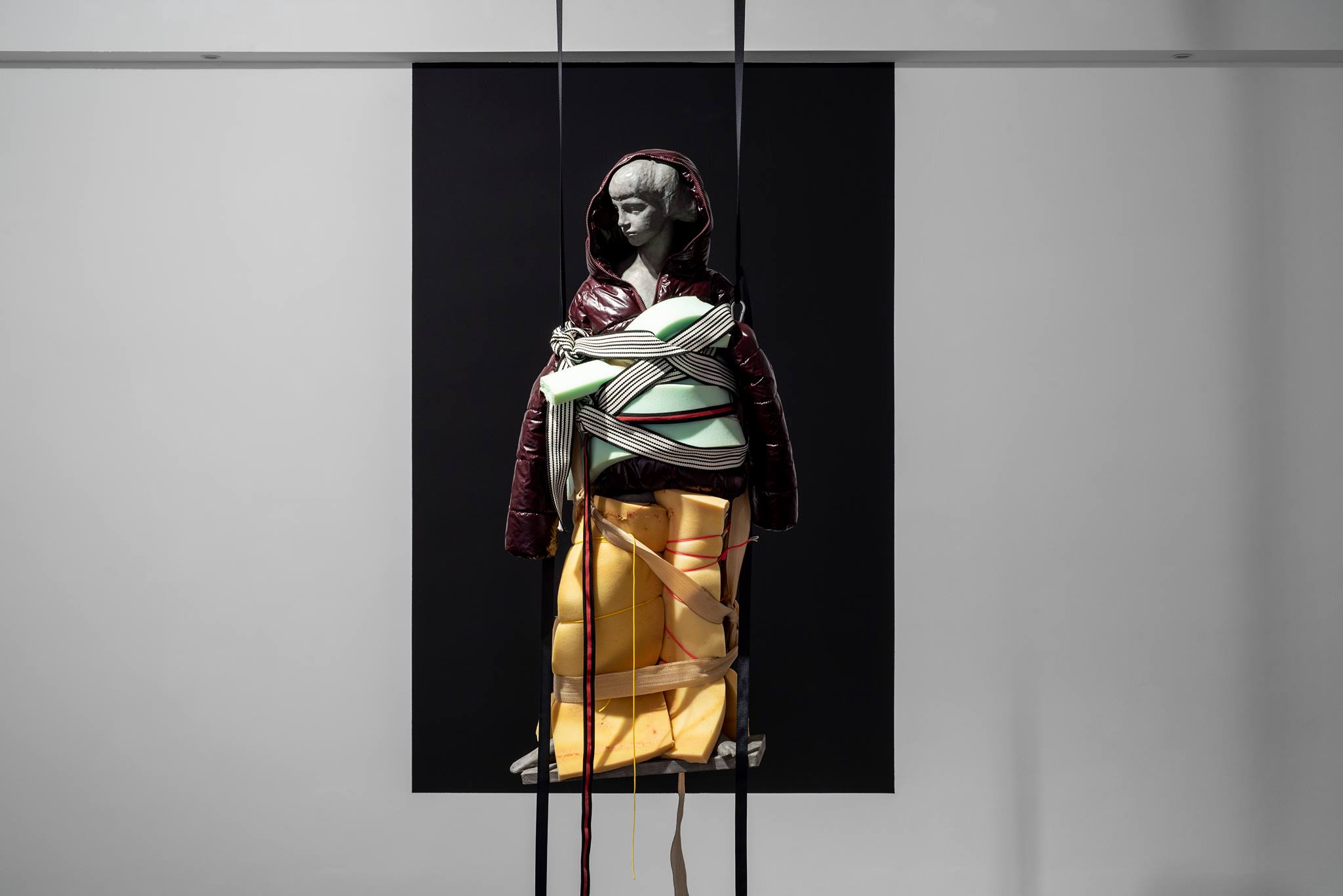
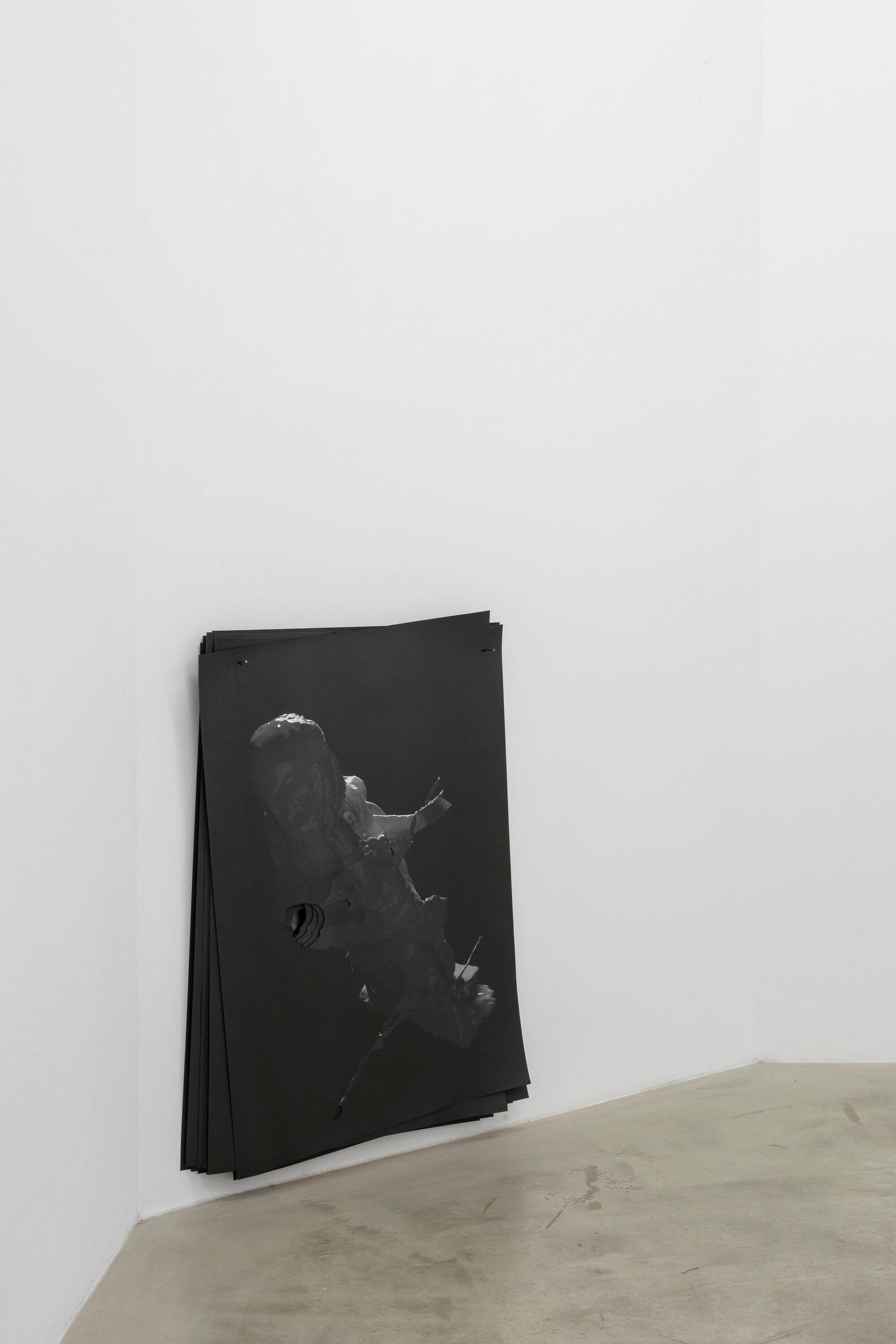
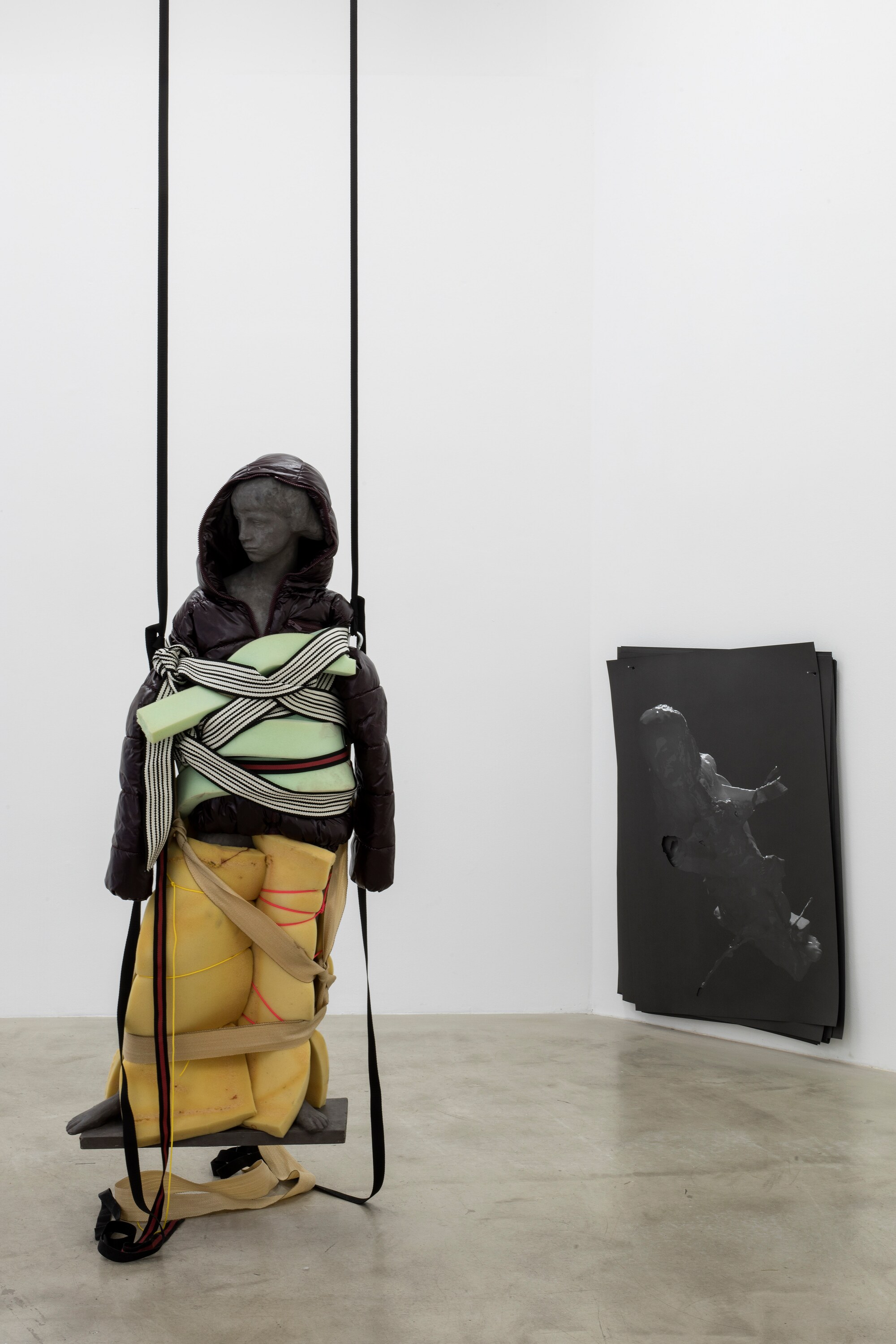
Hynek Alt is literally lifting up a sculpture of Miloš Zet, Czech sculptor active in the period of 1960s-1980s. Miloš Zet was a devoted communist, entering the party full of idealism right after the war. Changes of the political climate in the aftermath of the Prague Spring let to his expulsion in 1970. The statue, called “Young Day,” made in the same year as the Operation Neptune took place, is depicting a girl on the threshold of adolescence, full of life and energy ready to dutifully dedicate it to fulfilment of her role in building a new, just and positive future. Zet’s artworks were almost exclusively placed in the public space of socialist Czechoslovakia, conceived as integral parts of the complex architectural plan of an area or a building. For the socialist public they provided a manifestation of traditionally grounded beauty, mostly with a background of newly revived, restrained modernism, which after the death of Stalin and EXPO58 replaced the formerly dominant socialist realism. His sculptures were a natural part of a new organisation of the society, based on appreciation of similar values and forms as in Ancient Greece, re-verbalised by the renaissance, and further rediscovered by humanism after the WW2. “Young Day” was made in two copies cast in bronze. The first copy can be traced to a spa area in Teplice nad Bečvou, and the second found its location in Ostrava, Poruba. Through the collaboration of Hynek and Miloš Zet’s son Martin (also an artist), a plaster cast of “Young Day”, stored in Miloš Zet’s studio for decades, was given a new life opportunity in Hynek’s appropriation, called simply “Untitled (Young Day)”, 2018. By bounding the sculpture in transport straps and elevating it above the ground, giving it a sensation of weightlessness and levitation on the one hand, on the other a feeling of transfer or contingency of a new meaning, Hynek writes a next chapter in the life of this historical form. When the statue lifts up, its history comes with it, even though without a trained eye one can hardly trace its origin due to the relatively generic figurative style applied. It is quite likely that without mentioning it, you wouldn’t even associate her legacy with the period of the 1960s. Does she belong there or not, if we actually don’t realize it? Is the past only what we know about it or rather what we are told to believe?
The binding that holds the sculptures in place is carefully recreated, using a series of documentary images of various historical artworks prepared for a shipment. The original concept behind “Untitled” placed it on a darkened stage in a theatre for a brief span of one minute, presenting it almost as a spectre of its challenging past. As part of Neptune, the object receives the attention of the exhibition format, an intact place in time and space. The fact of levitation nevertheless displaces this status into an endless transition. As if the course of history were be halted in a single glimpse of a second, motionless, stuck in a movement of a minute hand which is not going forward any more, repeatedly announcing an uncanny revelation that time is no more.
Adéla Babanová | Neptune, curated by Jen Kratochvil, Zahorian & Van Espen, Bratislava, 2019